Hello!
In here you will find an overview of the authoritative authors that we plan on using for our research.

Vetta Sanders Thompson
Dr. Sanders Thompson is a leading researcher in the areas of racial identity, psychosocial implications of race and ethnicity in health communications, access to health services, and determinates of health and mental health disparities. She focuses on the importance of service to underserved populations through research, practice and community collaborations.
Figure 1

Anjanette Wells
Dr .Anjanette A wells is an Assistant Professor in Washington University. Anjanette Wells’ research centers on health, mental health, and community practice with a common thread of interest in issues related to adherence, participation, recruitment, and retention to research and practice with low-income, minority populations.
Figure 2

Jacquelyn Coats
The Brown School dual MSW/MPH program equipped her with the knowledge and practical tools needed to address social and structural barriers to health and well-being—and she was ready to work on finding meaningful solutions to eliminate health disparities and improve health outcomes for vulnerable populations.
Figure 3

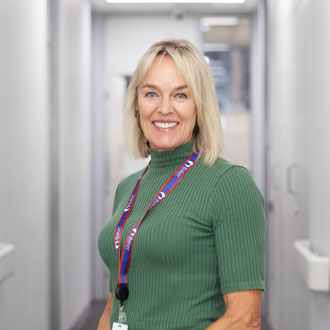
Lisa V. Adams
Dr. Lisa V. Adams is the Associate Dean for Global Health and an Associate Professor of Medicine in the Section of Infectious Disease and International Health at Dartmouth’s Geisel School of Medicine. She oversees Dartmouth College’s Global Health Initiative at the John Sloan Dickey Center for International Understanding. She is also the Director of Geisel’s newly established Center for Health Equity. In all her roles, she develops and oversees cross-cutting global health programs involving faculty and students.
Figure 4

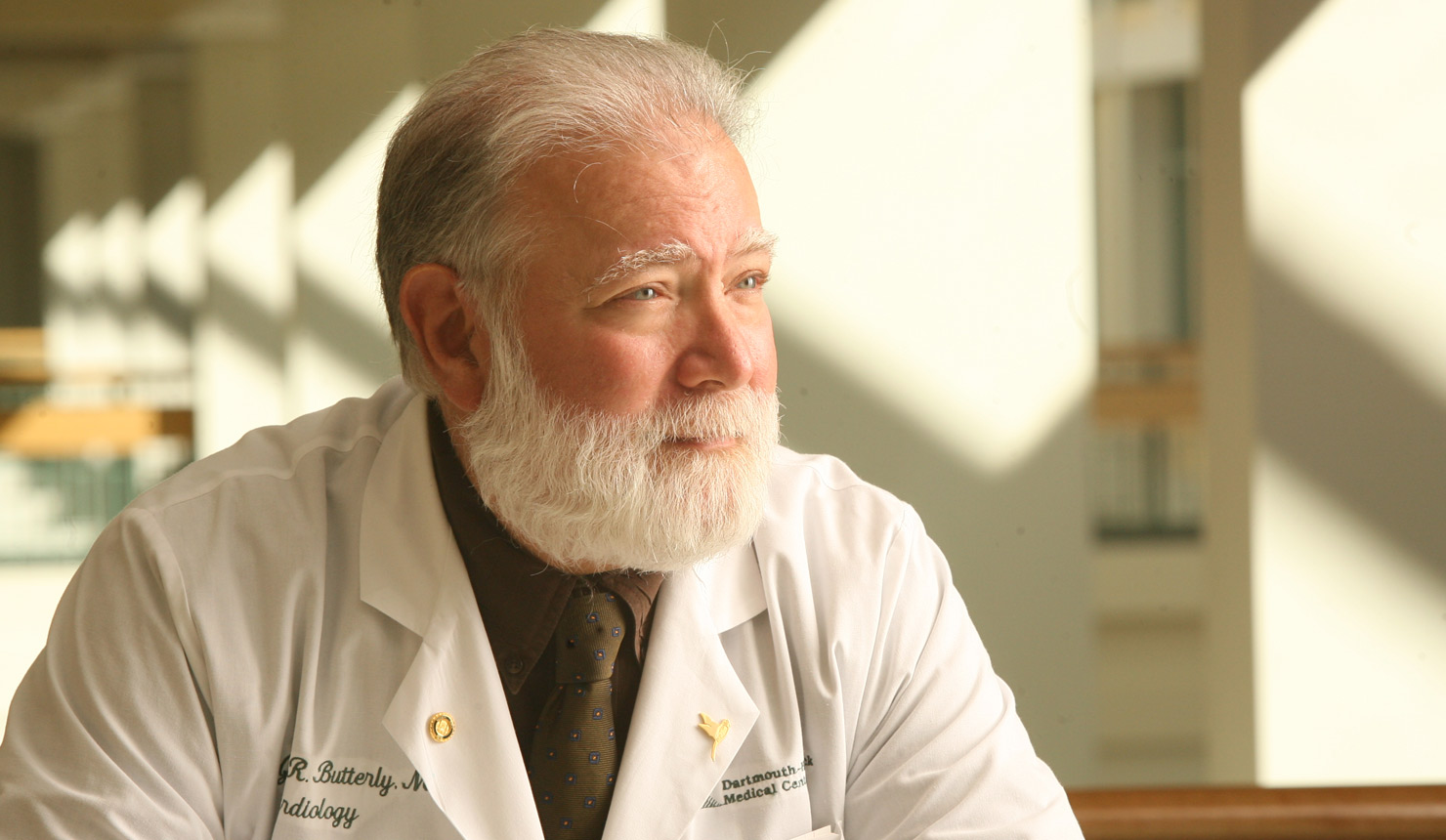
John R. Butterly
Dr. Butterly is a cardiologist, Professor of Medicine at Geisel School of Medicine at Dartmouth and The Dartmouth Institute for Health Policy and Clinical Practice, and an adjunct professor in the Department of Geography at Dartmouth College.
He has a personal and academic interest in global health issues, and in addition to his teaching responsibilities at the medical school, he teaches courses at the graduate and undergraduate level at Dartmouth College on “The Biology & Politics of Starvation” and “Global Health & Society”.
Figure 5

Ananya Roy
A Professor of Urban Planning and Social Welfare at the University of California, Los Angeles, and Director of the Institute on Inequality and Democracy at UCLA Luskin.
Figure 6

Genevieve Negrón-Gonzales
Is an Assistant Professor of Education at the University of San Francisco.
Figure 7

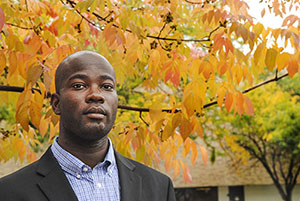
Kweku Opoku-Agyemang
Is Global Poverty and Practice Postdoctoral Fellow at the University of California, Berkeley.
Figure 8

Clare Talwalker
Dr. Clare Talwalker brings her training in cultural anthropology and South Asian studies and her specific interests in postcolonialism and the urban Indian public sphere to the IASTP. The courses she teaches include: Public Cultures in South Asia, Cultures and Capitalisms, Ethnographies of Globalization. and the methods course for the Global Poverty and Practice minor.
Figure 9

Flores-Flores
Medical doctor graduate of the University of San Martín de Porres. He earned a master’s degree in Global Health and Development from University College London, UK. Currently, Research Associate at the Global Non-communicable Diseases Center for Research and Training at Johns Hopkins University (https://www.globalncd.org/). Member of the Centre for Ageing Research (CIEN) of the University of San Martín de Porres.
Figure 10

Bernabe-ortiz
As Research Associate and Epidemiologist, I am currently working in CRONICAS, one of the Centers of Excellence in Chronic Diseases, at the Universidad Peruana Cayetano Heredia. My training was based on epidemiological methods for population-based observational and intervention studies. I have a master degree in Public Health at University of Washington (Seattle, US) and hold a PhD in Epidemiology and Population Health from London School of Hygiene and Tropical Medicine (London, UK).
Figure 11

Dixon
Professor John Dixon is a leading global expert in obesity, its comorbid conditions and weight loss treatments. He is rated as one of the top researchers worldwide in the fields of obesity, weight loss, morbid obesity, bariatrics and bariatric surgery. He is an adjunct professor at both the Primary Care Research Unit at Monash University and the Iverson Health Innovation Institute at Swinburne University, in Melbourne.
Figure 12

Schultz
Cecilia Schultz is currently pursuing her doctoral degree in Political Studies at the University of the Witwatersrand. Cecilia does research in International Relations, Political Theory and Political Economy.
Figure 13


We made this comparative table of our authors so that we could compare and contrast our relevant authorities so when the time to do our research come we know who to reference where or where we could find information related to what topic.
References
Adams, L. V., & Butterly, J. R. (2015). Diseases of Poverty: Epidemiology, Infectious Diseases,
and Modern Plagues. Retrieved from
https://udlap.idm.oclc.org/login?url=https://search.ebscohost.com/login.aspx?direct=true
&db=nlebk&AN=1059318&lang=es&site=eds-live
Committee on Health, Education, Labor, and Pensions. Subcommittee on Primary Health and
Aging, author. (2014). Is poverty a death sentence? : Hearing before the Subcommittee
on Primary Health and Aging of the Committee on Health, Education, Labor, and
Pensions, United States Senate, One Hundred Twelfth Congress, first session, on
examining poverty, September 13, 2011.
Dike, V. E. (2017). Poverty and Brain Development in Children: Implications for Learning.
Asian Journal of Education and Training, 3(1), 64–68. (Asian Online Journal Publishing
Group. 244 Fifth Avenue Suite D42, New York, NY 10001. Fax: 212-591-6094; e-mail:
info@asianonlinejournals.com; Web site: http://www.asianonlinejournals.com).
Dixon, J., & Macarov, D. (1998). Poverty: A Persistent Global Reality. London: Routledge.
Flores-Flores, O., Bell, R., Reynolds, R., & Bernabe-Ortiz, A. (2018). Older adults with
disability in extreme poverty in Peru: How is their access to health care? PLOS ONE,
13(12). https://doi.org/10.1371/journal.pone.0208441
Hebben, N. (2010). Poverty and Brain Development During Childhood: An Approach from
Cognitive Psychology and Neuroscience. ARCHIVES OF CLINICAL
NEUROPSYCHOLOGY, 25(1), 79–80. https://doi.org/10.1093/arclin/acp089
Roy, A., Negrón-Gonzales, G., Opoku-Agyemang, K., & Talwalker, C. V. (2016). Encountering
Poverty: Thinking and Acting in an Unequal World. Retrieved from
https://udlap.idm.oclc.org/login?url=https://search.ebscohost.com/login.aspx?direct=true
&db=nlebk&AN=1132436&lang=es&site=eds-live
Schultz, C. (2016). Poverty: Global Perspectives, Challenges and Issues of the 21st Century.
Retrieved from
https://udlap.idm.oclc.org/login?url=https://search.ebscohost.com/login.aspx?direct=true
&db=nlebk&AN=1419190&lang=es&site=eds-live
Sterk C. E., (1999) Tricking and Tripping . Portland: Book News Inc.
Strauss, Z., & Horsten, D. (2013). A human rights-based approach to poverty reduction: The role
of the right of access to medicine as an element of the right of access to health care. PER:
Potchefstroomse Elektroniese Regsblad, 16(3). Retrieved from
https://udlap.idm.oclc.org/login?url=https://search.ebscohost.com/login.aspx?direct=true
&db=edssci&AN=edssci.S1727.37812013000300012&lang=es&site=eds-live
Vetta Sanders Thompson, Anjanette Wells, & Jacquelyn Coats. (2012). Dare to be Sick: Poverty
and Health Among Vulnerable Populations. https://doi.org/10.1108/S1479-
358X(2012)0000008007
Figure 1. Retrieved from: https://publichealth.wustl.edu/wp-content/uploads/1970/01/sandersthompson_350.jpg
Figure 2. Retrieved from: https://research.uc.edu/images/default-source/speaker-images/anjanette.jpg?sfvrsn=9a643239_0
Figure 3. Retrieved from: https://brownschool.wustl.edu/Academics/Joint-and-Dual-Degrees/PublishingImages/quote-jacquelyn-coats.jpg
Figure 4. Retrieved from: https://geiselmed.dartmouth.edu/che/wp-content/uploads/sites/39/2015/08/Lisa-Adams_photo2013_JGFox-web.jpg
Figure 5. Retrieved from: https://geiselmed.dartmouth.edu/news/wp-content/uploads/sites/2/2015/11/Butterly_John_feature1.jpg
Figure 6. Retrieved from: https://upload.wikimedia.org/wikipedia/commons/0/0f/Professor_Ananya_Roy.jpg
Figure 7. Retrieved from: https://www.usfca.edu/sites/default/files/styles/student_profile_1600x900/public/about_usf/genevieve-negron-gonzales-1.jpg?itok=p-AM_xrb
Figure 8. Retrieved from: http://blumcenter.berkeley.edu/wp-content/uploads/2014/10/kweku-sm.jpg
Figure 9. Retrieved from: https://pbs.twimg.com/profile_images/616695493058375680/iTlluiQu.jpg
Figure 11. Retrieved from: https://d1hbpr09pwz0sk.cloudfront.net/profile_pic/antonio-bernabe-ortiz-15a5f7b7.jpg
Figure 12. Retrieved from: https://www.baker.edu.au/-/media/images/people/staff-bio/dixonj.jpg
Figure 13. Retrieved from: https://media.licdn.com/dms/image/C4E03AQFg-C_8YBqQEw/profile-displayphoto-shrink_200_200/0?e=1580342400&v=beta&t=ijC9yt_0W9qHr48Ms2k3ncHeXicufjcgfSbbfn3FbmI
Remember, each one of us has the power to change the world.
Yoko Ono
Thank you and see you on our next post!
 What is the relation between poverty and health?